



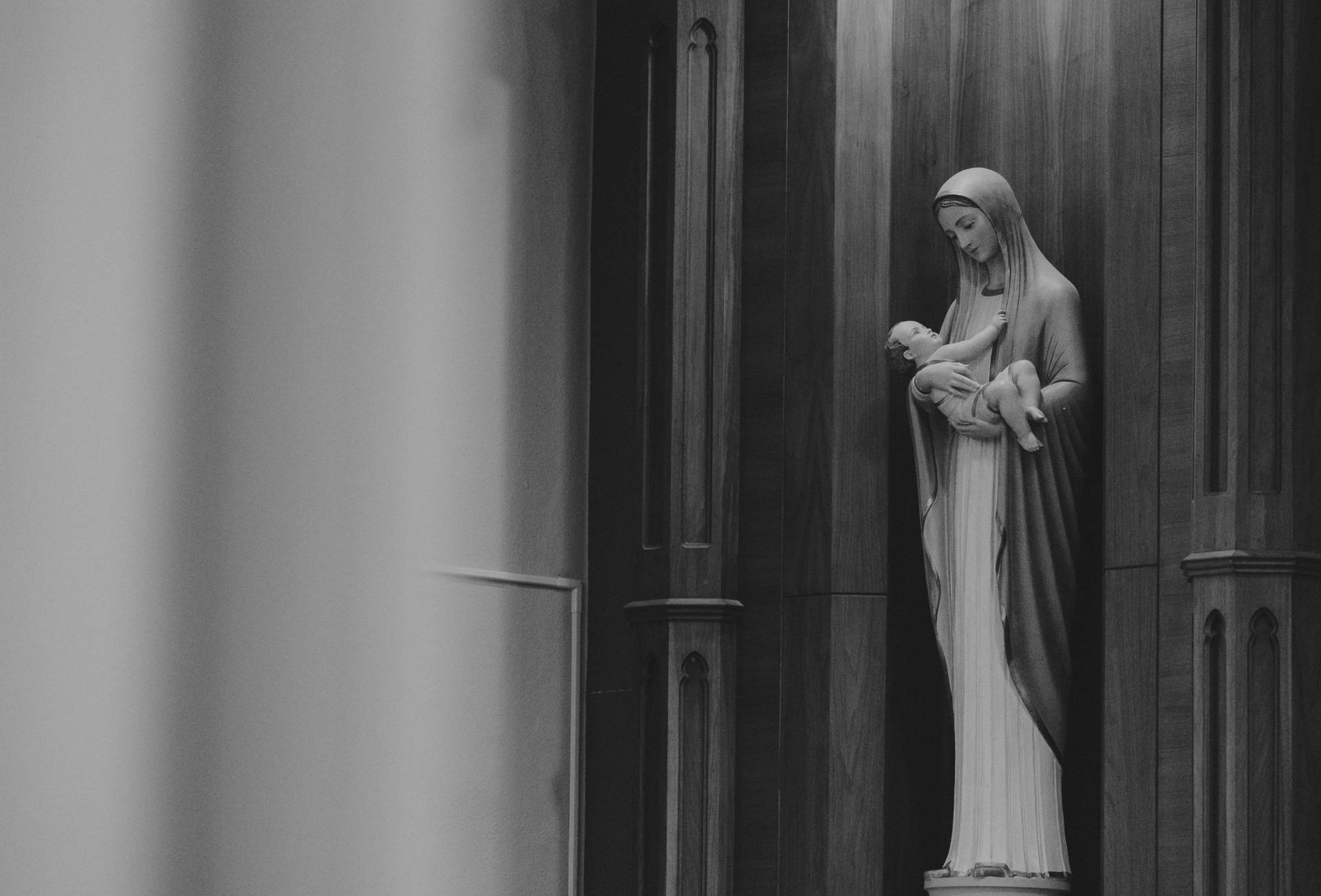

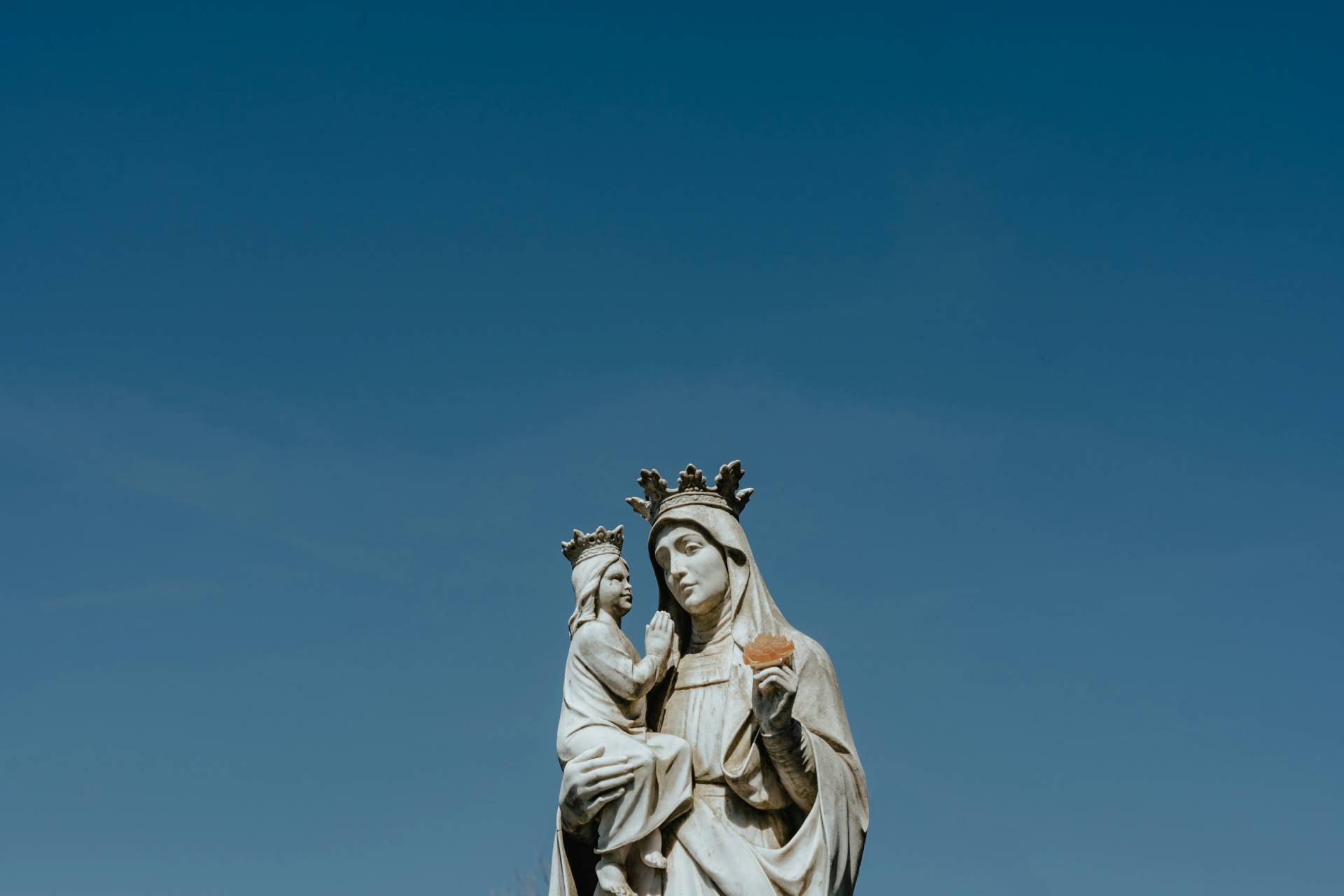












She Chose First — Free Will and Divine Foreknowledge
Mary was not chosen and then asked. She was asked because God already knew her answer — and loved her enough to build the salvation of the world around it.
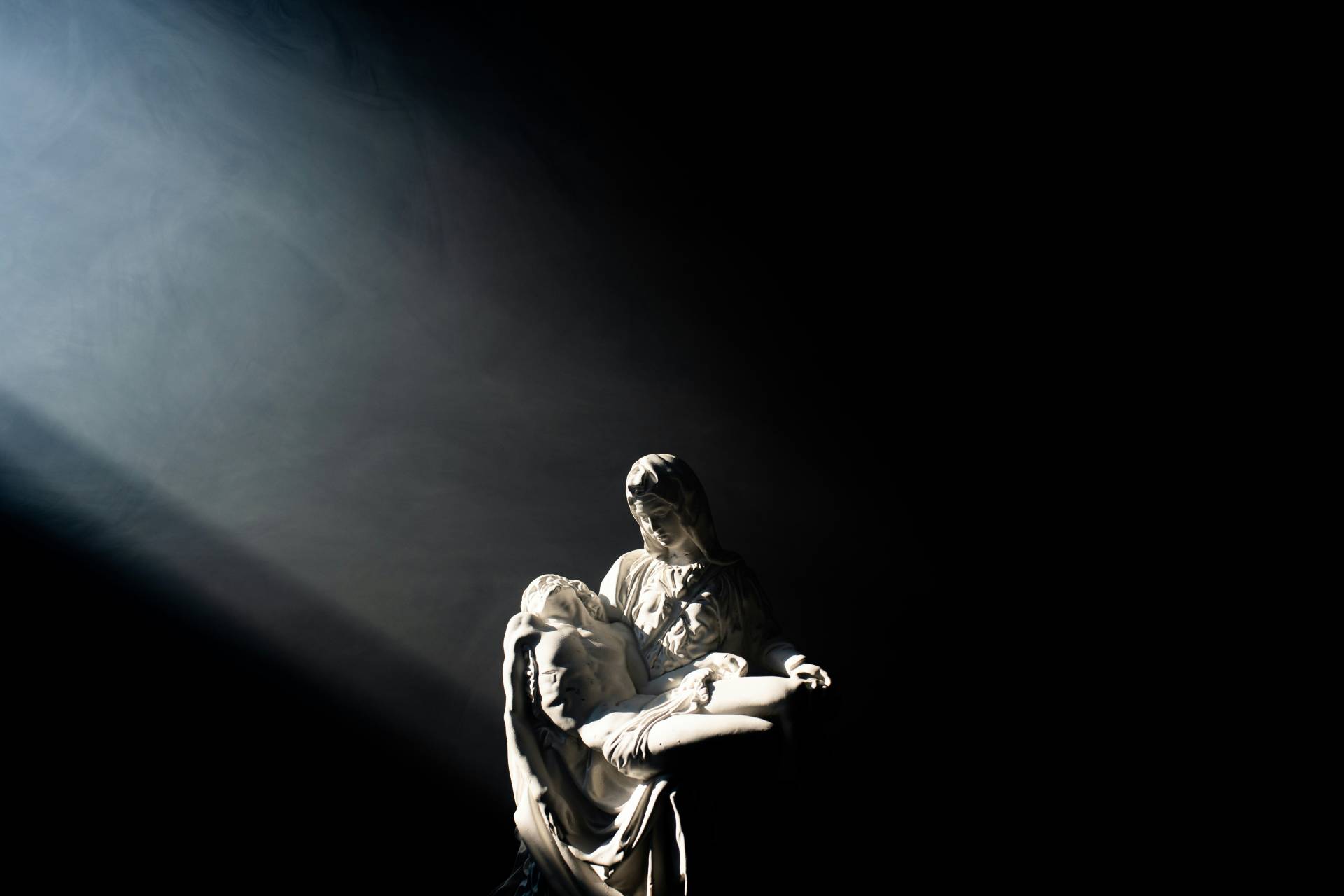
There is a question lurking inside the Annunciation that most Catholics have never fully sat with. Gabriel arrives in Nazareth. He greets Mary — not by name, but by title. He lays out the mission. And then, implicitly, he waits. Mary asks her question. She reflects. And she gives her answer: Fiat mihi secundum verbum tuum. Be it done to me according to your word.
The question is this: could she have said no?
And behind that question is an even deeper one — one that cuts to the heart of how God's sovereignty and human freedom relate to each other, not only in Mary's story but in the entire drama of salvation history. If God had already designated Mary as Queen of Heaven before Gabriel ever knocked on her door, if He had constituted her as kecharitōmenē — the Graced One — from the very first instant of her existence, then in what sense was her yes a free choice? And if it was predetermined, does that mean God sometimes suspends free will when the stakes are high enough?
The answer is more beautiful than either horn of that dilemma suggests. And it begins with understanding what God actually knew, and when He knew it.
The Queen Before the Question
Start with what the three opening words of the Annunciation actually establish. Gabriel does not say "Hail, Mary." He addresses her as kecharitōmenē — a perfect passive participle that functions, grammatically, as a noun. Not a description. Not a compliment. A name. A title. Her identity before God, declared before the mission is even explained.
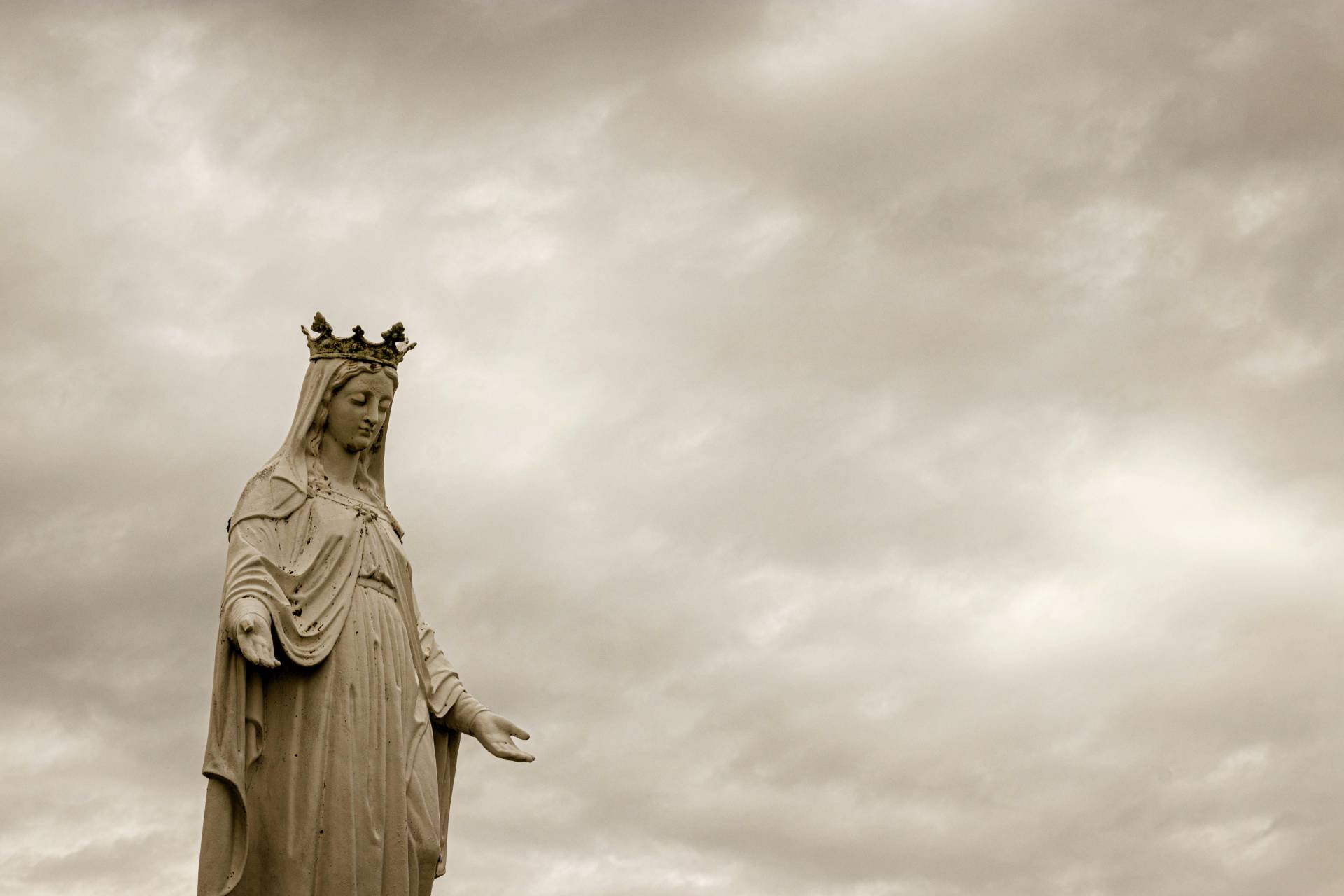
In the Greco-Roman world, chaire — "hail" — was reserved for royalty. It was the language of the imperial court, the word a subject uses before a sovereign. Gabriel is not making small talk. He is giving a royal salutation to someone who already holds a royal title. And the title he gives her — kecharitōmenē — is the most theologically loaded word in the New Testament. It appears only twice in all of Scripture. Its grammar encodes a state of being that is complete, permanent, and uninterrupted: one who has been fully graced and remains in that fullness now, with no moment of sin preceding it and none following.
This means something crucial for the question of free will. The Annunciation was not a job interview. God was not extending a conditional offer pending Mary's acceptance, ready to revoke the title of Queen if she declined. She was already Queen. Gabriel was announcing it, not proposing it. The queenship preceded the question.
The Annunciation was not God asking Mary if she wanted to become who she already was. It was Heaven formally declaring, to her and to history, what God had established before time began.
Middle Knowledge: God Knew Her Answer Before She Existed
So how do we hold this together? If her queenship was already established, if her sinlessness was already constituted, if the plan was already built — in what sense did she freely choose?
The answer lies in understanding how God relates to time. He doesn't. God does not sit inside the flow of history watching events unfold and reacting to them. He sees all of time — past, present, future — in a single eternal act of knowledge. He does not wait for Mary's answer. He does not have Gabriel ask and then hold His breath. He already knows her answer, because He sees it, as a present reality, in His eternal vision.
This is what Catholic theology calls scientia media — middle knowledge — developed by the Jesuit theologian Luis de Molina in the 16th century. The idea is that God knows not only what will happen, but what any free creature would freely choose in any possible set of circumstances. Before creating anything, before time itself, God saw every free choice that would ever be made — not by overriding freedom, but by knowing free creatures with infinite precision.
Here is the sequence, as best as creaturely minds can grasp it: Mary's free yes came first — first in God's eternal vision, before the world was made. God saw it. He saw this particular soul, with her particular nature, in that particular moment, freely choosing to give herself entirely to His will. And then — timelessly, outside of sequence — He built the entire plan of salvation around that choice He already saw her make.
He made her sinless not to manufacture her yes. He made her sinless because He already saw her yes, and the sinlessness was the necessary condition for the Incarnation that her yes would make possible. The kecharitōmenē was God's response, in eternity, to a choice Mary would make in time. He saw her decision before she ever existed, and He loved it, and He built everything around it.
This means God did not create Mary as an instrument. He did not sculpt a puppet and put a yes in its mouth. He saw a person — a real, free, genuine human soul — making a real choice entirely from her own heart. And He loved that person and that choice so much that He made her the vessel of the Incarnation and the Queen of the universe in response to it.
But Was It Really Free If There Was Nothing Pulling Her Away?
Here is the sharper question, the one worth sitting with. Even granting everything above — even granting that God saw Mary's free choice and built the plan around it — was the choice really free if there was nothing in her nature incentivizing "no"? If her will was perfectly ordered toward God with no concupiscence, no pull in the opposite direction, no temptation to refuse — is that genuinely free, or is it something more like a river that can only flow downhill?
This is a serious philosophical question and it deserves a serious answer.
The mistake hidden in the question is an assumption we have absorbed so deeply we don't notice it: that genuine freedom requires internal conflict. We assume a "real" choice has to feel like a struggle — competing desires, genuine pull in both directions, real uncertainty about which way it will go. But this is not a universal truth about freedom. It is a description of fallen freedom. It is what freedom looks like in us, because we carry concupiscence — the wound of original sin that sets our desires against our reason and our reason against God.
But consider God. God cannot sin. Is God therefore not free? He is the very source and definition of freedom. Consider the saints in the beatific vision. They cannot sin — not because they are constrained or coerced, but because their freedom is finally, fully, perfectly what it was always meant to be. The absence of a pull toward evil does not diminish their freedom. It completes it.
We have mistaken the symptoms of broken freedom — the struggle, the conflict, the temptation — for freedom itself. Mary's will was not restricted. It was perfected. And a perfected freedom, finally free from everything that wars against the good, is the most free thing that exists.
Kecharitōmenē names the state of a human soul when God's own grace fills it so completely that sin is entirely absent. That is not a cage. That is the destination the rest of us are being redeemed toward. That is what Heaven is. And Mary inhabited it on Earth — not as a constraint imposed from outside, but as the fullest possible expression of what a human will actually is when it is finally, completely itself.
Her yes was not coerced. There was no subliminal manipulation. Her nature was constituted in perfect alignment with the good, which means her yes was the most authentic, most personal, most genuinely her own act possible. She wasn't pushed toward yes. She simply was the kind of being for whom yes was the complete and total expression of her own deepest self.
What This Means for Judas, Pharaoh, and the Rest of Us
Once you understand the Mary answer, the harder cases begin to clarify.
With Judas: the prophecy of his betrayal did not cause the betrayal any more than a historian's accurate account of a battle caused the battle. God, seeing all of time at once, saw Judas's free and culpable choice, and included it in the architecture of salvation. The foreknowledge does not force the hand. A parent who knows their child well enough to predict exactly what they will choose has not taken away the child's freedom — they have simply known the child truly.
With Pharaoh: the tradition holds that God did not manufacture cruelty in an innocent man. He withdrew certain softening graces from a man whose heart was already hardened, and permitted that existing hardness to run its appointed course for the liberation of His people. There is a meaningful moral difference between causing an evil disposition and permitting one that already exists to reach its end.
The pattern across all of these cases is the same: God does not bypass freedom. He governs free creatures through their freedom, not around it. He designs history around the free choices He already sees — which means the plan is sovereign and the choices are genuinely free, simultaneously, without contradiction.
She Chose First
This is the truth at the heart of the Annunciation, and it is more beautiful than either "God forced her" or "God waited nervously to see what she would say."
Mary chose first — first in God's eternal vision, before Gabriel arrived, before the world was made, before she herself existed. God saw that choice. He saw this woman, this particular free soul, giving herself entirely and freely to His will. And He loved that choice so much that He constituted her entire existence in response to it — making her sinless so her yes could bear its full fruit, crowning her Queen so her intercession could carry its full weight, designating her Mother of God so her fiat could become the hinge of all of human history.
He did not create an instrument. He loved a person. And He arranged all of creation around the free gift that person would freely give.
This is not a God who overrides human freedom when the stakes get high enough. This is a God who knows human freedom so perfectly, so intimately, so completely, that He can build an entire cosmos around it — and still leave every choice genuinely, really, irreducibly free.
Gabriel arrived in Nazareth not to ask a question, but to announce an answer that had already been given — given by Mary, in eternity, before she ever drew breath.
Fiat mihi secundum verbum tuum.
Be it done to me according to your word.
She said it. She chose it. And God, who had always known she would, had been building toward it since before the foundation of the world.
May the Lord bless you and keep you.
About the author
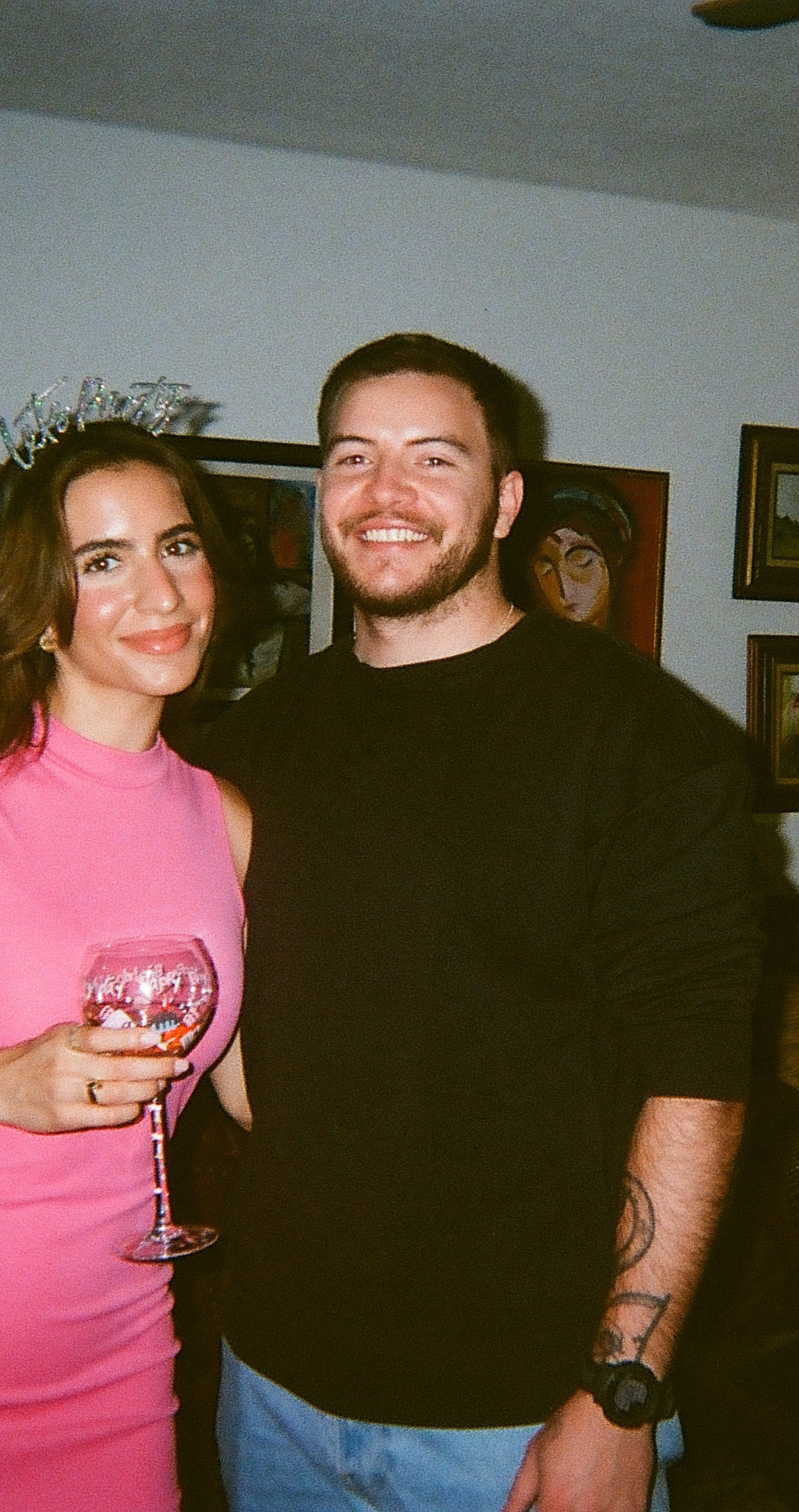
I'm a Catholic layman from Fort Lauderdale, Florida. No seminary, no credentials — just a deep love for the Faith and a conviction that ordinary Catholics are called to evangelize.
Related articles
Apologetics
The Perpetual Virginity of Mary: A Complete Linguistic, Historical, and Theological Defense
The perpetual virginity of Mary — the teaching that Mary remained a virgin before, during, and after the birth of Jesus — is one of the oldest and most consistently held beliefs in Catholic and Orthodox Christianity.
Join the community
Subscribe to our weekly newsletter for curated inspiration, delivered to your inbox.
We never share your data. See Privacy Policy for more info.