O my Jesus, forgive us our sins,
save us from the fires of hell;
lead all souls to heaven,
especially those who are in most need of Thy mercy.
Amen.
The Fatima Prayer
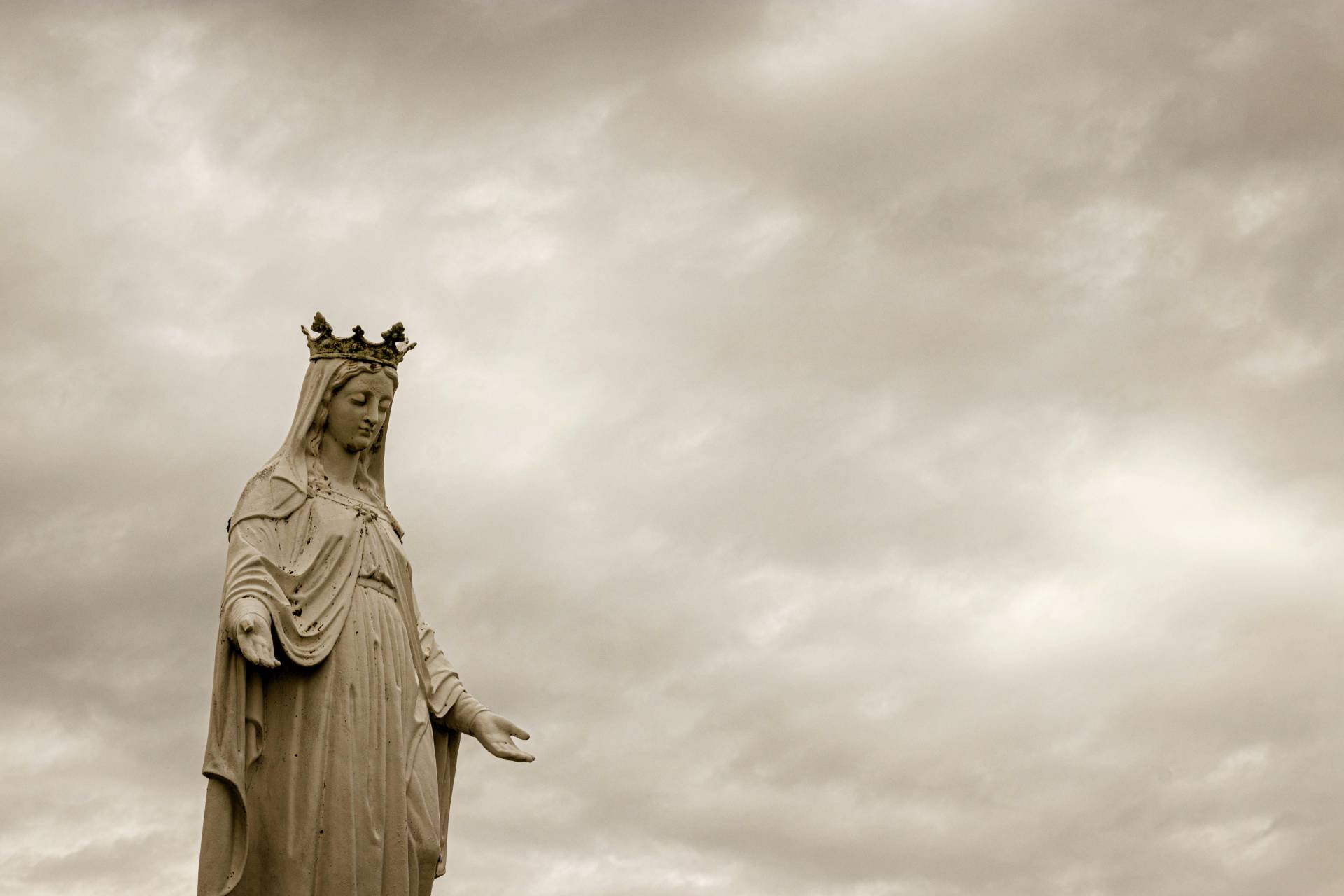
The O My Jesus prayer — commonly called the Fatima Prayer — was given to the Church through the apparitions of Our Lady of Fatima in 1917, when Mary asked that it be added to the end of each decade of the Rosary. It is brief enough to be memorized by a child and deep enough to occupy a theologian. In four lines it moves from personal petition to universal intercession, from the forgiveness of sins to the salvation of every soul, with particular urgency for those furthest from God's grace.
O My Jesus
The prayer opens with a form of address that is both intimate and precise. My Jesus — not an abstract deity, not a historical figure at a respectful distance, but a person known personally, claimed personally, spoken to with the directness of a child addressing a parent. The word my does not suggest ownership. It suggests relationship — the language of someone who knows Christ as Savior, Redeemer, and Friend, not merely as a subject of theological study.
This personal address sets the tone for everything that follows. The petitions come from inside the relationship, not from outside it.
Forgive Us Our Sins
The first petition is a confession before it is a request. To ask for forgiveness is to acknowledge that there is something to be forgiven — that the one praying is not standing before God in their own righteousness but in their own need. It echoes the Lord's Prayer, the tax collector in the temple, every honest moment in the Psalms when the gap between what we are and what God is becomes impossible to ignore.
It is also a communal petition: forgive us, not merely forgive me. The one praying the Rosary is not praying in isolation. They are praying as a member of the Body of Christ, aware that their sins are never entirely private and that the forgiveness they seek is needed by every member of the human family.
Save Us from the Fires of Hell
This line is stark, and it is meant to be. Hell is not invoked as a threat but as a reality — one that gives the prayer its urgency. The Catholic faith does not domesticate the stakes of eternal life. Separation from God is possible, it is permanent, and it is the worst thing that can happen to a human soul. To ask to be saved from it is not fear-mongering. It is the most reasonable prayer a creature can make before the God who created it for something infinitely better.
The petition is also an act of trust: we cannot save ourselves from this. The asking acknowledges our complete dependence on the mercy of the one being addressed.
Lead All Souls to Heaven
Here the prayer opens to its widest horizon. Not some souls. Not the souls of those who deserve it. All souls — the dying, the forgotten, the hardened, the ones who have never heard the name of Jesus, the ones who have heard it and turned away. The prayer refuses to set limits on who can be included in its intercession.
This line makes every person who prays the Rosary an intercessor for the world. It is the missionary heart of the Church expressed in a single petition — the desire that the mercy poured out on Calvary would reach every human being for whom it was intended.
Especially Those Who Are in Most Need of Thy Mercy
The final phrase is the prayer's most compassionate movement. It identifies a priority — not those who are most righteous, most devout, or most likely to respond, but those who are most in need. The souls in greatest danger. The ones furthest from grace. The ones for whom no one else may be praying.
This is the logic of Divine Mercy: grace goes first to where it is most needed, not where it is most deserved. To pray this line is to align oneself with that logic — to become, for a moment, a channel of intercession for the very people one might otherwise be tempted to write off. It is an act of charity disguised as a prayer, and a prayer that has the power to change the one who offers it.
May the Lord bless you and keep you.