The Lord's Prayer — known in the tradition as the Our Father — is the prayer Jesus taught His disciples when they asked Him how to pray. It is not one prayer among many. It is the prayer from which all Christian prayer takes its orientation. St. Augustine said that all legitimate petitions are contained within it. St. Thomas Aquinas said it is structured to teach us not only what to pray for but in what order to desire spiritual goods.
St. Luke gives a shorter version with five petitions (Luke 11:2-4). St. Matthew gives the fuller form with seven (Matthew 6:9-13). The Church has traditionally retained Matthew's version in liturgical practice:
Our Father who art in heaven,
hallowed be thy name.
Thy kingdom come.
Thy will be done on earth, as it is in heaven.
Give us this day our daily bread,
and forgive us our trespasses,
as we forgive those who trespass against us,
and lead us not into temptation,
but deliver us from evil.
The Lord's Prayer in Christian Tradition
From the earliest days of the Church, the Our Father has been central to worship. The Didache — one of the oldest non-biblical Christian texts, dating to the late first century — instructs Christians to pray it three times a day, taking the place of the Jewish Eighteen Benedictions. It was never merely a formula to be recited. It was a rhythm of life, a daily orientation of the whole person toward God.
The Church Fathers recognized in it the complete grammar of Christian petition. Tertullian called it the summary of the entire Gospel. Augustine agreed, arguing that nothing the Christian legitimately desires lies outside its scope. What we want most deeply, rightly ordered, is already contained in these words.
Calling God Father
The prayer begins with an address that was genuinely startling in its original context. To address the God of Israel as Father — intimately, personally, as a child addresses a parent — was not the ordinary posture of Jewish prayer. Jesus not only models it but commands it. He is not merely teaching a form of words. He is revealing a relationship.
Paul makes the theological ground explicit: it is the Holy Spirit who enables this address, crying out within believers "Abba, Father" (Galatians 4:6). The ability to call God Father is itself a gift — a consequence of adoption in Christ, by which those who belong to the Son are made children of the Father. The first word of the prayer announces everything that salvation means.
The Seven Petitions
The prayer's structure moves from God's honor to our need, from the eternal to the immediate. The first three petitions — hallowed be thy name, thy kingdom come, thy will be done — are directed entirely outward, toward God and His purposes. They ask for nothing for ourselves. They are acts of worship before they are petitions.
The final four turn to human need: daily bread, forgiveness, protection from temptation, deliverance from evil. But even here, the needs are placed in proper relation to God's purposes rather than treated as independent requests. We ask for bread — not abundance, not comfort, but what sustains us today. We ask for forgiveness in the same measure we extend it — a clause that binds our reception of mercy to our practice of it. We ask not to be led into temptation but delivered from evil — acknowledging our fragility and our dependence on God's protection.
The Eucharistic and Eschatological Dimensions
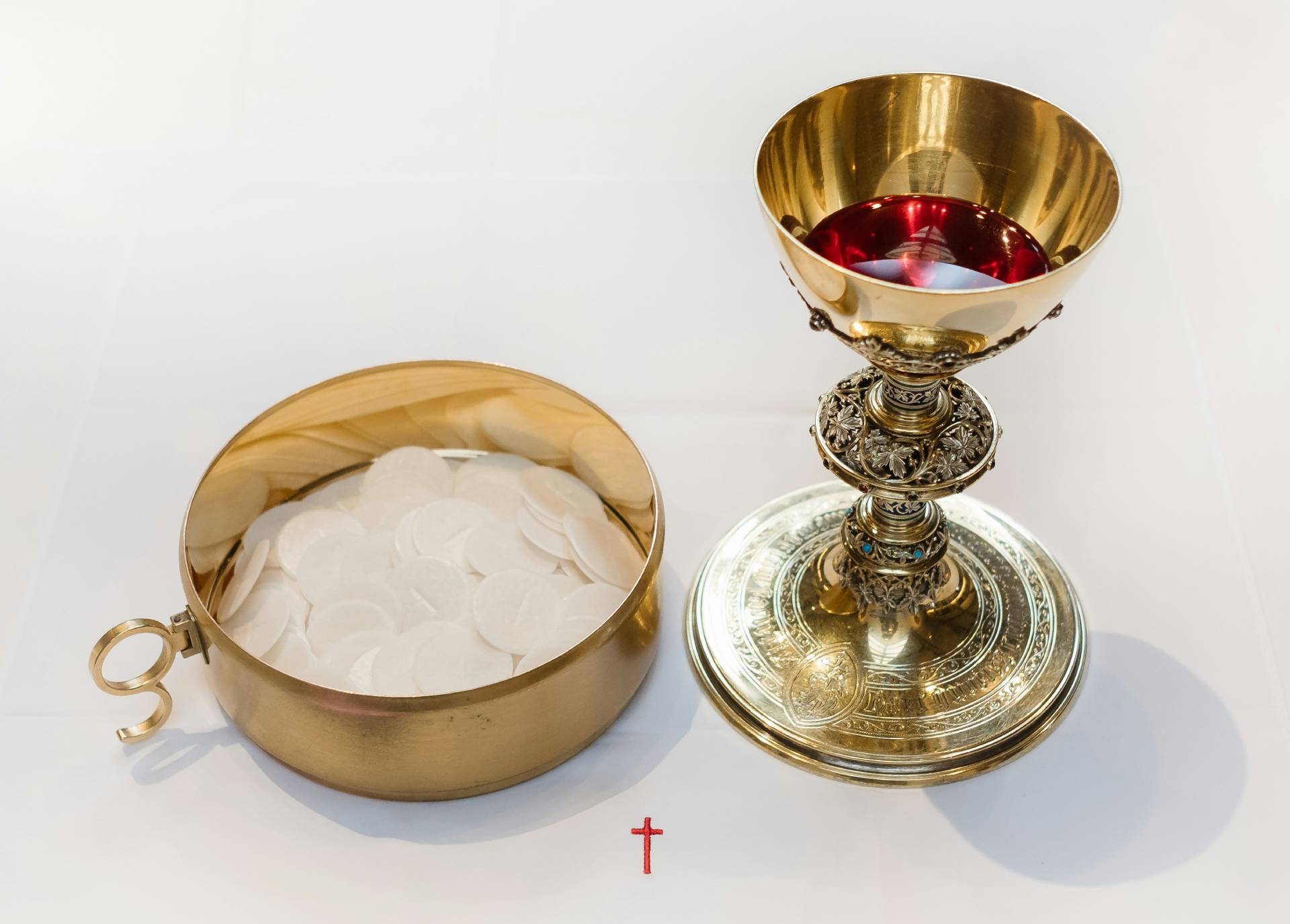
In the Mass, the Our Father is prayed immediately before Communion — positioned as a threshold between the Eucharistic prayer and the reception of Christ's body and blood. It is the prayer that prepares the soul for the most intimate encounter with God available in this life. The petition for daily bread carries, in this context, a double meaning: the bread that sustains physical life and the Bread of Life that sustains eternal life.
The prayer also looks forward. Thy kingdom come is not only a prayer for the gradual spread of God's reign in human hearts. It is an anticipation of the final coming of Christ, the completion of what history is moving toward. The Our Father is simultaneously the prayer of the present moment and the prayer of expectation — the Church's voice lifted toward the God who is coming, crying with the whole of creation: Come, Lord Jesus.
May the Lord bless you and keep you.